North West water supply
See how we're responding to population growth and climate change in the North West to improve water security and supply in the region.
Find out more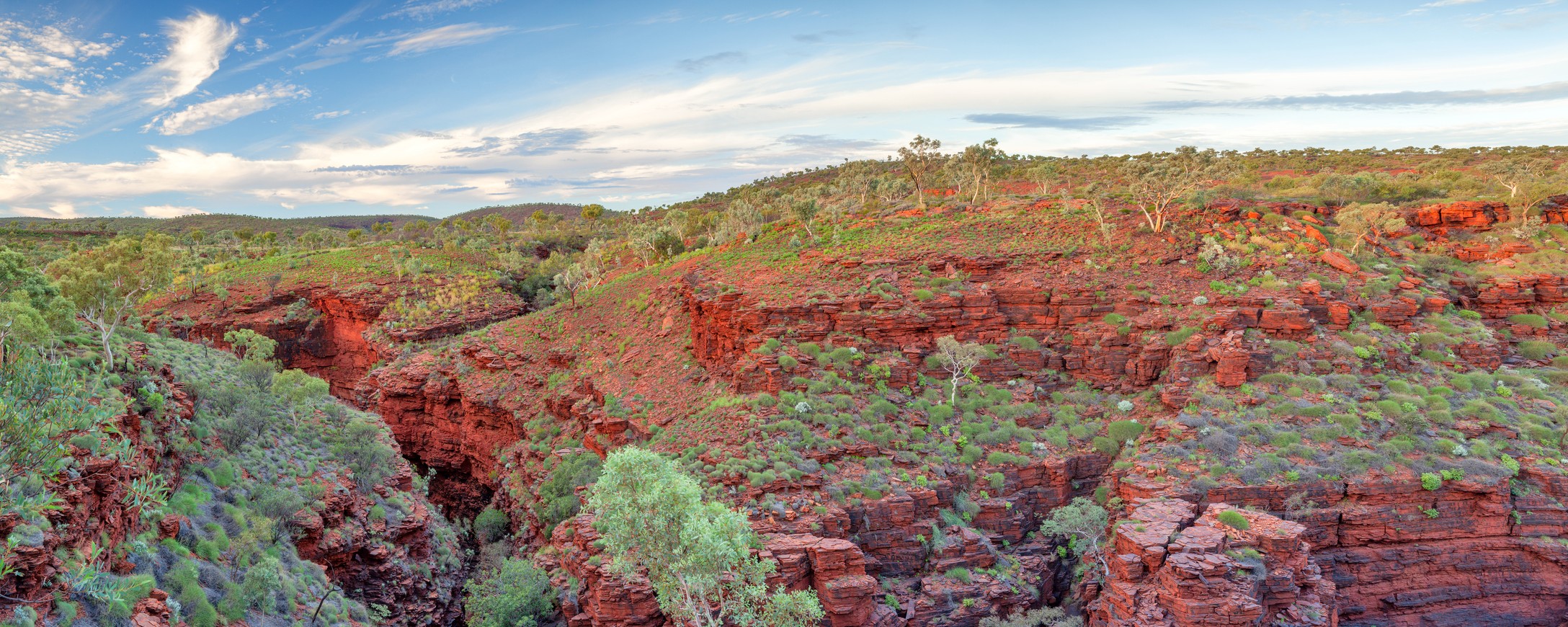
Western Australia's north is one of the world's last great wilderness areas with fewer people per square kilometre than almost anywhere else on our planet.To the north of WA is an ancient land with unique Australian culture, wild rivers, deep gorges, and sprawling red and blue colours that make up the landscape.
Most towns in the North West Region (NWR) rely on groundwater, except Wyndham (supplied by Moochalabra Dam), and those supplied by the West Pilbara Water Supply Scheme (WPWSS), which services Karratha, Wickham, Dampier, Roebourne, Point Samson, and nearby industrial areas.
Harding Dam H is the main water supply for the WPWSS, with groundwater added when needed. Across the NWR, about 84% of water comes from groundwater and 16% from surface water, such as Harding and Moochalabra Dams, These percentages can change each year depending on how much water is stored in the dams. These portions can vary each year depending on dam storage levels. For example, in wetter years, up to 5 GL of water has been taken from Harding Dam. However, in late 2025 the dam could not be used as water levels had fallen to their lowest in more than 30 years.
Recent decades have shown that, unlike the drying trend observed in the South West, parts of Western Australia's North West, particularly some towns in the Kimberley, have experienced increases in total rainfall.
However, this trend doesn’t apply to all areas. Rainfall in the North West changes a lot from year to year and from one town to another. The Pilbara in particular has some of the most unpredictable rainfall in Australia (second only to central Australia). This has resulted in in many communities experiencing extended dry periods and very low annual totals. Our warming climate is intensifying these harsh conditions with increased temperature extremes.
In general, the rainfall our residents in the Pilbara and Kimberley regions rely on has always been highly variable. This is partly because northern WA is influenced by a broad range of climate systems including monsoonal systems in the far north, tropical cyclones along the northern coastline and very low and variable rainfall patterns inland. The northern WA coastline also lies within the most tropical cyclone-prone region of the Australian coast (Broome to Exmouth). Historically an average of 2 cyclones cross this stretch of coastline each year. Although, future climate predictions indicate cyclones may be less frequent but more intense.
These tropical cyclones bring heavy rainfall with them and make for an extremely valuable contribution to our surface and groundwater supplies; but, their variability means we can't solely rely on the water sources they recharge. Climate projections indicate that the intervals between rainfall events may become more variable across the northern regions over the next century.
While we'll likely see fewer cyclones, or possibly a later start to the cyclone season, a predicted increase in their intensity will mean greater potential for damage to our water infrastructure. In response, we're continuously working to ensure our infrastructure can withstand these extreme events.
Around 42% of treated wastewater is recycled in the North West. It's used for a range of purposes such as irrigating golf courses and public open spaces.
Wastewater recycling plays a vital role in supporting ongoing economic activity and population growth, and we’re committed to further exploring recycling opportunities in the region.
Given the high temperatures of the North West we continue to work with communities and businesses on a range of programs to reduce water use in the area. These include:
Find out more about sustainable water initiatives and programs in the North West.
We can all take action on climate change and reduce our water use. Find out what you can do to save water starting today.
See how we're responding to population growth and climate change in the North West to improve water security and supply in the region.
Find out more