Every drop counts after dry winter delivers little to WA dams
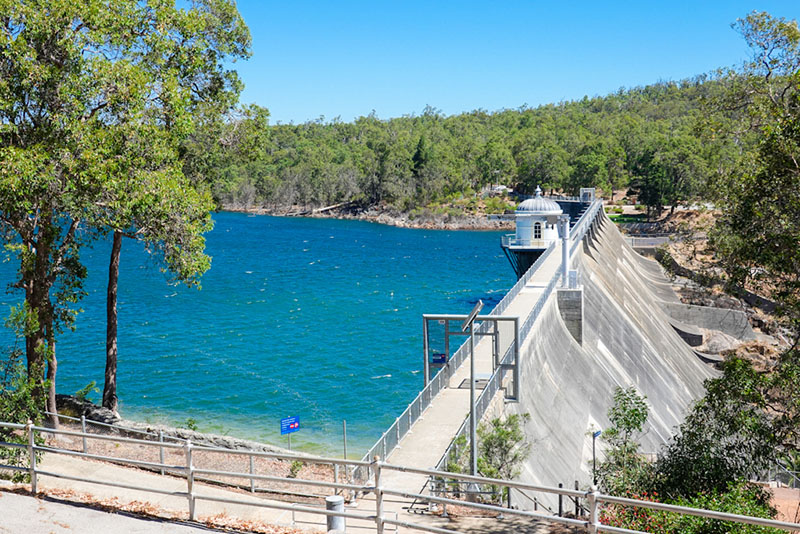
- Streamflow to southern dams at 10-year low after below-average winter rainfall
- Western Australians urged to be more waterwise in spring ahead of another hot summer
- Keeping sprinklers switched off during September could save billions of litres of water
Western Australians are being urged to be extra vigilant with household water use this spring after below-average winter rainfall delivered the lowest dam streamflow in a decade.
Little more than 12.5 billion litres have flowed into Perth's scheme water dams this year, with total storage down 5 per cent to its lowest level since 2017.
It is a far cry from the 75 billion litres of streamflow averaged over the last decade and barely a trickle compared to the average 420 billion litres that flowed annually prior to the mid-1970s.
Rainfall now provides around 15 per cent of Perth's drinking water, with most coming from desalination and groundwater.
Perth's water use has regularly exceeded forecast demand this winter, prompting Water Corporation to ask households to keep reticulation systems switched off during September.
Waterwise Programs Manager Damien Postma said southern WA’s dry winter was another reminder that we can no longer rely on rainfall alone to meet our drinking water needs.
“While the State Government invests in new climate-resilient water sources, such as Perth’s third desalination plant at Alkimos, it does not mean we can afford to waste the water we already have,” Mr Postma said.
“Households must get into the habit of using water efficiently all year round.
“With around one-third of household water use occurring in the garden, billions of litres could be conserved by keeping sprinklers switched off during September.
"The weather is still fairly mild, there is moisture in the soil and most gardens do not need regular watering due to the seasonal rainfall. By hand watering as required, gardens can continue to thrive.”
“There are also simple ways to save water indoors by keeping showers to four minutes, turning off the tap while brushing, and only running dishwashers and washing machines with a full load.
“The small changes we make now can make a big difference to saving precious drinking water ahead of another hot summer.”